
Hyderabad Franchise Announces Separate Budget For Direct Signings: PSL 2026 Game Changer
The newest addition to Pakistan’s premier cricket league just dropped a strategic bombshell that’s got everyone talking. Hyderabad franchise has officially announced it will allocate a separate budget specifically for direct player signings, marking an unprecedented approach in HBL PSL 2026 franchise building. This aggressive strategy signals the expansion team’s intention to hit the ground running rather than endure typical first-season growing pains.
Unlike traditional expansion teams that rely primarily on auction acquisitions, Hyderabad’s management has secured permission from the Pakistan Cricket Board to directly sign four players before the auction even begins. This separate budget mechanism ensures the franchise can negotiate premium deals with both domestic stars and international superstars without compromising their auction war chest. With PSL 2026 starting March 26, Hyderabad’s front office is working overtime to assemble a competitive roster that can challenge established powerhouses from day one.

The strategic thinking behind this approach reveals Hyderabad’s ambition to avoid the typical expansion team struggles that plague most first-year franchises across global sports leagues. By securing core players through direct signings before auction dynamics inflate prices, Hyderabad positions itself to build around established talent while still maintaining financial flexibility for auction day bargains.
Understanding Hyderabad’s Direct Signing Strategy
The separate budget allocation for direct signings represents a calculated risk that could redefine how expansion teams approach roster construction in PSL. Rather than entering the auction as pure buyers competing against six established franchises with existing team chemistry, Hyderabad creates a foundation first, then fills gaps strategically.
Key advantages of this approach:
- Secures core players before auction price inflation
- Builds team chemistry during pre-season training
- Attracts marquee players with guaranteed contracts
- Maintains auction budget flexibility for targeted acquisitions
- Establishes franchise identity and playing philosophy early
- Reduces dependency on unpredictable auction outcomes
This dual-budget system essentially gives Hyderabad two distinct phases of team building rather than putting all eggs in the auction basket like traditional expansion models would require.
How the Four Direct Signings Will Work
PCB’s approval for four direct signings comes with specific guidelines designed to maintain competitive balance while giving Hyderabad a legitimate chance at immediate competitiveness. The franchise must strategically distribute these signings between domestic Pakistani talent and international cricket stars.
Direct Signing Framework:
| Aspect | Details |
|---|---|
| Total Direct Signings | 4 Players Maximum |
| Budget Source | Separate from Auction Pool |
| Player Eligibility | Domestic & Foreign Players |
| Signing Timeline | Before PSL 2026 Auction |
| Strategic Purpose | Squad Stability & Competitiveness |
The franchise management must balance these four signings across different player categories to ensure they don’t create positional weaknesses that competitors could exploit throughout the season.
Potential Direct Signing Targets for Hyderabad
While official announcements haven’t been made, cricket insiders speculate about which players might receive direct signing offers from Hyderabad. The franchise needs a strategic mix of leadership, batting firepower, bowling depth, and emerging talent.
Likely domestic targets include:
- Released stars from retention process: Players like Saim Ayub or Fakhar Zaman who couldn’t be retained due to category restrictions
- Underutilized talents: Domestic performers seeking bigger roles than their previous franchises offered
- Regional connections: Sindh-based cricketers with natural affinity to Hyderabad
- Young prospects: Emerging category players ready for breakthrough seasons
International signing possibilities:
- Experienced T20 specialists seeking PSL debuts
- Former PSL performers who left positive impressions
- Players with Pakistan Super League familiarity
- All-rounders providing tactical flexibility across formats
The franchise must balance star power with budget constraints while ensuring their four signings complement whatever players they acquire through the upcoming auction process.
Financial Implications of Separate Budget Model
Allocating a separate budget for direct signings requires sophisticated financial planning that most expansion teams don’t attempt. Hyderabad’s ownership group clearly committed significant capital beyond standard franchise fees to execute this aggressive roster-building strategy.
Budget allocation breakdown:
| Budget Category | Purpose | Strategic Value |
|---|---|---|
| Direct Signing Budget | 4 Pre-Auction Players | Squad Foundation Building |
| Auction Budget | Remaining Squad Positions | Targeted Gap Filling |
| Retained Player Budget | N/A for Expansion Team | Not Applicable |
| Supplementary Budget | Injury Replacements | Season-Long Flexibility |
This financial structure gives Hyderabad more total spending capacity than traditional expansion teams while creating competitive advantage through strategic allocation timing.
Comparison with Sialkot’s Approach
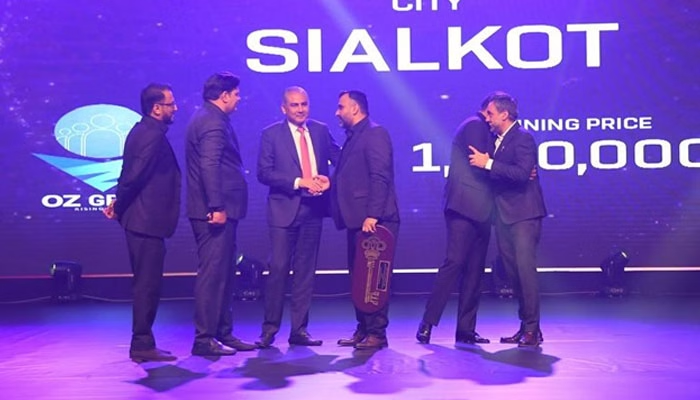
Interestingly, Hyderabad’s fellow expansion franchise Sialkot hasn’t announced a similar separate budget strategy for direct signings. This divergence in approach between the two new teams creates a natural experiment about which roster construction philosophy works better for expansion franchises.
Sialkot appears to be following the more traditional route of selecting four players from those released by existing franchises during the retention process, then relying heavily on auction acquisitions to complete their squad. Time will tell whether Hyderabad’s aggressive spending or Sialkot’s conservative approach yields better first-season results.
Impact on PSL 2026 Auction Dynamics
Hyderabad’s direct signing strategy fundamentally alters auction dynamics for all seven franchises. By removing four quality players from the available auction pool before bidding even begins, Hyderabad creates artificial scarcity that could inflate prices for remaining talent.
How this affects other teams:
- Established franchises face fewer options for replacing released players
- Competition intensifies for remaining top-tier domestic talent
- International players gain negotiating leverage knowing demand exceeds supply
- Mid-tier players see value increases due to reduced available alternatives
- Auction strategies must adapt to contracted player pool
Smart franchises will adjust their auction budgets and target lists based on which four players Hyderabad signs directly, creating a strategic chess match before the auction gavel even drops.
Timeline Leading to PSL 2026
While the official PSL 2026 auction date remains unannounced, the tournament’s confirmed March 26 start date creates a tight timeline for Hyderabad to finalize direct signings, participate in the auction, and conduct adequate pre-season preparation.
Expected timeline:
- Late January 2026: Direct signing negotiations and announcements
- Early-Mid February: Player auction (typical PSL scheduling)
- Late February: Training camp commencement
- Early March: Practice matches and squad finalization
- March 26: PSL 2026 tournament begins
This compressed schedule means Hyderabad’s management must work efficiently to identify, negotiate, and announce their four direct signings within the next few weeks to maintain their strategic advantage.
What This Means for Pakistan Cricket
Beyond just franchise strategy, Hyderabad’s approach signals evolving sophistication in PSL franchise management. The willingness to allocate separate budgets for different acquisition methods shows ownership groups treating PSL franchises as serious sports businesses rather than vanity projects.
Broader implications include:
- Increased franchise valuations across the league
- More aggressive player recruitment strategies
- Greater financial commitment from ownership groups
- Enhanced competitive balance through strategic spending
- Better compensation opportunities for domestic cricketers
For Pakistani cricket overall, this financial escalation means more money flowing to players, better infrastructure investments, and increasing global relevance for the Pakistan Super League as a premier T20 competition.
FAQs About Hyderabad’s Direct Signing Budget
Q1: How many players can Hyderabad sign directly before the auction?
Hyderabad has PCB permission to directly sign four players using a separate budget allocation before the PSL 2026 auction occurs.
Q2: Will direct signings affect Hyderabad’s auction budget?
No, the franchise has allocated a separate budget specifically for direct signings, keeping their auction purchasing power intact for additional acquisitions.
Q3: Can Hyderabad sign both Pakistani and foreign players directly?
Yes, Hyderabad can distribute their four direct signings between domestic Pakistani cricketers and international players based on strategic needs.
Q4: When will Hyderabad announce their direct signings?
Official announcements are expected in late January 2026, before the PSL auction date is finalized, giving players time to prepare.
Q5: Is Sialkot using the same direct signing strategy?
No, Sialkot appears to be following traditional expansion team methods of selecting from released players and relying primarily on auction acquisitions.
Q6: How does this strategy help Hyderabad compete immediately?
Direct signings establish squad core and team chemistry before auction, allowing strategic gap-filling rather than building entirely through unpredictable bidding wars.
Hyderabad’s Bold Statement to the League
The separate budget announcement represents more than just financial maneuvering. It’s a psychological statement to the entire Pakistan Super League that Hyderabad isn’t content being a typical expansion team satisfied with just participation. The franchise wants immediate competitiveness and championship contention from season one.
This aggressive approach could pressure Sialkot to adopt similar strategies or risk falling behind their fellow expansion franchise before either team plays a single match. More importantly, it forces established teams to take both new franchises seriously as genuine threats rather than easy victories for padding win-loss records.
As PSL 2026 approaches, all eyes will be on which four players Hyderabad ultimately signs directly and whether this innovative budget allocation strategy delivers the immediate competitiveness the franchise is betting millions on achieving.