Blackout Confirmed: The Real Reason PSL 11 Won’t Air in India
The Pakistan Cricket Board (PCB) has drawn a line in the sand. As the Pakistan Super League (PSL) Season 11 approaches, the commercial landscape of the tournament is being radically redrawn. On Tuesday, the PCB confirmed a landmark decision that will reverberate across the cricketing world: PSL 11 will not be televised in India.
For years, the Indian market has been viewed as the financial engine of global cricket viewership. Yet, in a move that defies conventional economic logic, the PCB has excluded India from its latest international rights deal—and still managed to secure a record-breaking financial windfall.
The board announced the sale of international broadcast rights (excluding India) to Walee Technologies, achieving a staggering 149% increase in value compared to the previous cycle. This article dives deep into the numbers, the politics, and the strategic pivot that proves the PSL brand is now strong enough to stand on its own global legs.
The Deal: Walee Technologies and the 149% Surge
The headline story isn’t just about who won’t see the PSL; it’s about how much the league is worth to the rest of the world. The PCB’s agreement with Walee Technologies, a leader in local innovation, covers all global territories outside of Pakistan’s borders—with the notable exception of India.
Walee Technologies emerged as the highest bidder, aggressively crossing the PCB’s reserve price. This competitive bidding process signals that international markets (such as the UK, USA, Australia, and the Middle East) are hungry for Pakistani cricket content.
PSL 11 International Rights: By The Numbers
The financial leap is significant because it is calculated on a “like-for-like” basis, meaning the growth is organic and not inflated by adding new territories.
| Metric | Details |
| Winning Bidder | Walee Technologies |
| Contract Duration | 1 Year (PSL Season 11) |
| Excluded Territory | India |
| Growth vs Previous Cycle | + 149% |
| Bid Status | Exceeded PCB Reserve Price |
The “India Blackout”: A Deliberate Strategy
In the past, cricket boards have bent over backwards to secure broadcast slots in India, where over a billion cricket fans reside. However, the PCB’s decision to withhold the Indian region for PSL 11 was “not accidental.”
1. Diplomatic Strain
The decision is deeply rooted in the ongoing diplomatic tension between Pakistan and India. With political relations shaping sporting calendars (evident in the Champions Trophy and Asia Cup disputes), the PCB has taken a hardline stance. The absence of Indian broadcasters is a direct consequence of this geopolitical freeze.
2. The “Broadcast Ban” Reality
Practically, this formalizes a “Pakistan Super League broadcast ban” in India. Indian fans, who have historically followed stars like Babar Azam and Shaheen Afridi, will have no legal TV avenue to watch live action. This move isolates the Indian market but simultaneously protects the PCB’s long-term positioning by not forcing a compromise in a hostile market.
3. Betting on Alternative Markets
The strategy is clear: diversify or die. By focusing on the diaspora in the UK, North America, and the Gulf, the PCB is proving that its product has commercial viability independent of the “Big Three” hegemony.
Official Reactions: Confidence in the Brand
The leadership within the PCB and the winning bidder has projected an image of strength and optimism following the deal.
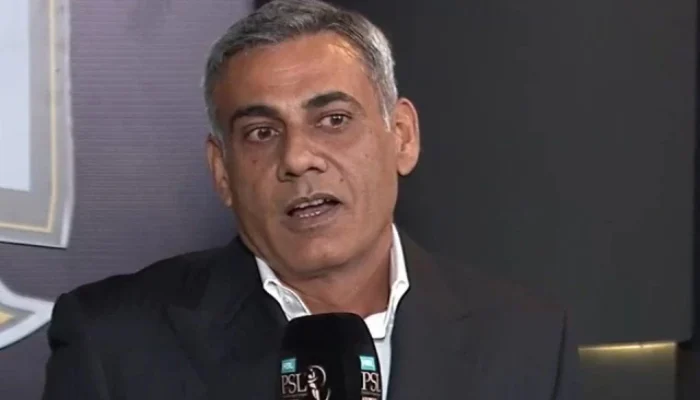
Salman Naseer (PSL Chief Executive)
Naseer did not mince words regarding the financial health of the league. He highlighted that the 149% increase validates the league’s quality, regardless of political hurdles.
“We are extremely pleased with the outcome of the International Media Rights sale, which has delivered a remarkable 149% increase over the last cycle for the same regions. The HBL PSL continues to attract strong global interest, and this agreement reinforces our confidence in the league’s long-term commercial trajectory.” — Salman Naseer
Ahsan Tahir (CEO, Walee Technologies)
For Walee Technologies, this is more than a business deal; it is a statement of technological sovereignty.
“This is a victory for every Pakistani who believes in ‘Made in Pakistan’ technology.” — Ahsan Tahir
Tahir’s comments hint at ambitious plans to modernize how the PSL is consumed digitally, likely leveraging AI and data analytics to enhance the viewer experience for global fans.
The Economic Implication: Breaking the Myth
For a decade, sports economists have argued that no cricket league can thrive without Indian viewership revenue. PSL 11 is challenging this hypothesis.
Why the 149% Rise Matters:
- Brand Maturity: The PSL has matured into a premium product. High-quality production and competitive cricket mean broadcasters are willing to pay more.
- Scarcity Value: With fewer leagues offering the raw pace and passion of the PSL, advertisers in western markets see it as a high-value asset.
- Digital Dominance: The shift to companies like Walee suggests a pivot toward digital-first consumption, where subscription models in dollars and pounds outweigh ad revenue from traditional TV in lower-currency markets.
Where to Watch PSL 11? (The Solution for Fans)
While Indian fans are left in the dark, the rest of the world (and local Pakistani fans) have clear avenues to watch the action.
The PCB has highlighted tapmad as a primary destination for digital streaming.
- Platform: tapmad
- Quality: HD Streaming
- Compatibility: Mobile, Tablet, Web
- Feature: Ad-free options (usually available) and smooth buffering technology.
Conclusion: A League Standing Tall
The sale of PSL 11 rights is a watershed moment. It is a declaration that while cricket is a game of bridges, business is a game of leverage. By securing a massive financial upscale without the Indian market, the PCB has sent a “strong signal” that the Pakistan Super League is a global powerhouse, not just a regional curiosity.
As the tournament begins, the eyes of the world will be on the PSL—except for one neighbor, who, by design, has been left off the map.